What Does a Web Designer Actually Do? A Plain-English Explainer
If you’ve ever searched for someone to build your website and found yourself staring at a list of job titles (web designer, web developer, UX designer, full-stack developer, digital designer) wondering what any of them actually means, you’re not alone. The terminology is genuinely confusing, even for people who work adjacent to the industry. This post explains what a web designer actually does, how the role differs from related disciplines, and what to look for when you’re hiring one for your business.
The Short Answer
A web designer is responsible for how a website looks, feels, and works for the people using it. They make decisions about layout, colour, typography, imagery, navigation, and the overall user experience, with the goal of creating a site that is visually appropriate for the brand, intuitive to use, and effective at achieving the business’s goals. Design, in the professional sense, is not decoration. It’s problem-solving with visual tools.
What a Web Designer Actually Does Day to Day
The work of a web designer spans a wider range of activities than most people expect. A typical project involves most of the following, not just the parts that end up on screen.
Discovery and Research
Before any visual work begins, a good web designer invests time in understanding the business, its audience, and its goals. What does this business do? Who are its customers, and what do they need from a website? What do competitors’ sites look like, and where is there an opportunity to do something more effective? This research phase is what separates purposeful design from decoration. A site designed without this understanding may look appealing in isolation but fail to serve the people it’s meant to convert.
Information Architecture
Information architecture is the structural planning of a website before any visual design begins: deciding which pages the site needs, how they relate to each other, how navigation should be organised, and what content belongs where. This is sometimes called a sitemap or site structure. Getting it right has a significant impact on user experience, SEO, and how naturally visitors move through the site toward the actions you want them to take. Getting it wrong is expensive to fix after the site is built.
Wireframing and Prototyping
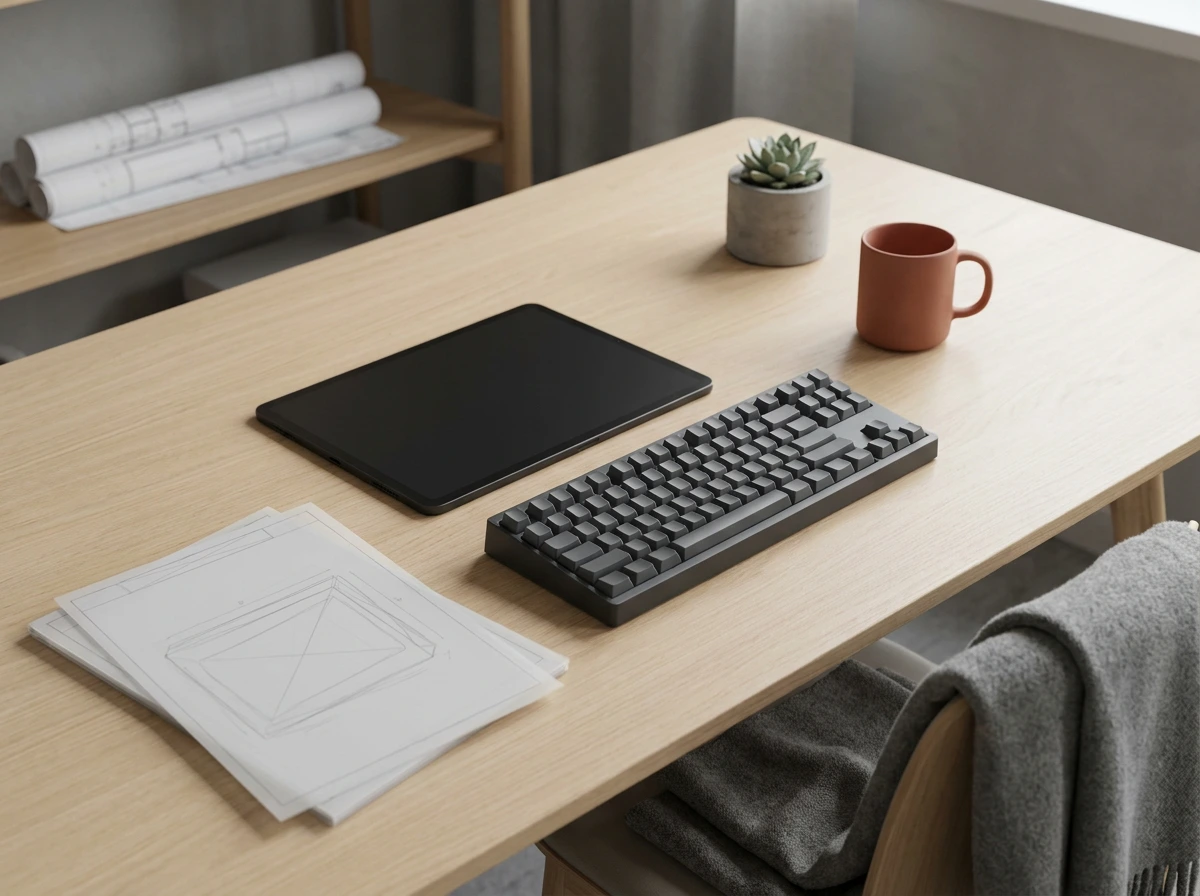
Wireframes are simplified, low-fidelity layouts that map out the structure and hierarchy of each page without any visual design applied. They look like rough sketches or grey-box diagrams and exist to agree on content placement, navigation logic, and page flow before committing to a visual direction. A prototype adds basic interactivity so the design can be tested and walked through as if it were a real site. Working through these stages before high-fidelity design begins saves significant time and cost by catching structural problems early, when they’re cheap to fix.
Visual Design
This is the stage most people picture when they think of web design: creating the actual visual appearance of the site. It includes choosing or applying a colour palette, selecting and pairing typefaces, designing layouts for each page type, sourcing or creating imagery, and producing high-fidelity mockups that show exactly what the finished site will look like. Good visual design is not simply about aesthetics. It communicates the right message to the right audience, creates appropriate trust signals, and guides visitors toward the actions the business needs them to take.
Responsive Design
A website in 2026 needs to work correctly across a wide range of screen sizes, from a large desktop monitor to a small smartphone screen, and everything in between. Responsive design means designing layouts that adapt fluidly to different screen widths rather than producing a separate mobile version of a site. A professional web designer considers mobile from the very beginning of the design process, not as an afterthought once the desktop version is done. Given that the majority of Irish web traffic comes from mobile devices, a design that doesn’t prioritise the mobile experience is not fit for purpose.
Collaboration with Developers
In most professional workflows, design and development are handled by different people or in distinct phases. A web designer produces detailed visual specifications (sometimes called design handoff files) that a developer uses to build the site in code. This requires a web designer to understand how designs translate into working code, what’s technically feasible within the chosen platform, and how to communicate design intent clearly. A designer who has no understanding of development constraints produces designs that are either impossible to build or expensive to approximate.
Content Integration and CMS Setup
Most websites are built on a content management system (CMS) like WordPress, which allows the business owner to update content without touching code. A web designer is typically involved in setting up the CMS, creating the page templates within it, and integrating all content into the finished site. This includes not just text and images but contact forms, maps, booking systems, social media feeds, and any other functional elements the site requires.
Testing and Quality Assurance
Before a site launches, it needs to be tested thoroughly across devices and browsers to confirm that everything works as intended. This includes checking for broken links, testing all forms and interactive elements, verifying that the site displays correctly on different screen sizes and in different browsers, and checking page load speed. Launching without proper testing is one of the most common ways sites end up with embarrassing errors visible to real customers.
Web Designer vs Web Developer: What’s the Difference?
This is the question that causes the most confusion, and the honest answer is that the boundary between the two roles has become blurry in practice. The traditional distinction is:
- A web designer focuses on visual design and user experience: how the site looks and how people navigate and use it.
- A web developer focuses on the code that makes the design function: writing HTML, CSS, JavaScript, PHP, and the back-end logic that powers interactive features, databases, and integrations.
In reality, many professionals operate across both disciplines to varying degrees. A designer with strong front-end development skills (HTML, CSS, and JavaScript) can build out their own designs in code. A developer with strong design sensibility can produce visually accomplished work without a separate designer. The term “full-stack developer” typically refers to someone who handles both front-end (what visitors see) and back-end (the server, database, and application logic) development.
At PerleMedia, we work across both design and development, which means your project doesn’t get lost in handoffs between separate disciplines. The same team that designs your site builds it. This produces a more coherent result and eliminates a common source of inconsistency in agency-produced work.
Web Designer vs UX Designer: Is There a Difference?
UX design (User Experience design) is a discipline focused specifically on how people experience and interact with digital products. A UX designer conducts user research, maps user journeys, designs interaction flows, and tests designs against real user behaviour. In larger organisations, UX and visual design are handled by separate specialists. In small business web projects, the web designer typically covers both: researching the audience, designing the user journey, and producing the visual execution.
When a web designer talks about UX, they mean the practice of designing websites that work well for the people using them, not just ones that look well in a static screenshot. Good UX means clear navigation, logical page structure, fast load times, accessible content, and a journey that moves visitors naturally from arrival to action.
What a Web Designer Is Not Responsible For (Unless Agreed)
It’s worth being clear about what typically falls outside a standard web design scope, because misunderstandings here are a common source of friction in client-agency relationships.
- Copywriting: the written content of your website is usually the client’s responsibility unless copywriting is explicitly included in the scope. A web designer will layout and style your copy, but they won’t typically write it for you.
- Photography: unless a photography shoot is part of the brief, the client is usually responsible for supplying images. A designer can source and licence stock photography, but original photography of your premises, team, or products needs to be arranged separately.
- SEO management: a professional web designer should build solid SEO foundations into your site (proper page structure, meta data, schema markup, page speed optimisation). Ongoing SEO, content strategy, and link building are typically separate engagements.
- Hosting and domain: unless your designer or agency includes managed hosting, you’ll need to arrange and pay for your own hosting environment and domain registration.
Understanding what’s in and out of scope before a project begins is one of the most important conversations to have upfront.
What to Look for When Hiring a Web Designer in Ireland
The quality of web design work varies enormously. Here’s what separates the professionals from the practitioners going through the motions.
- A portfolio with relevant work: look for examples that are relevant to your sector and goals, not just visually impressive in isolation. Ask about the brief and the outcomes, not just the aesthetics.
- A structured process: a designer who can walk you through their process from brief to launch, with clear phases and deliverables at each stage, is operating professionally. One who jumps straight to showing you templates is not.
- Questions before answers: a good designer asks about your business, your audience, and your goals before talking about visual direction. Design decisions should be informed by business context, not made in isolation from it.
- Technical awareness: even if a designer doesn’t write code themselves, they should understand how their designs translate to a built site and what’s technically feasible within your chosen platform.
- Transparency about what’s included: a clear, detailed proposal that specifies exactly what is and isn’t in scope prevents the misunderstandings that derail projects mid-build.
What PerleMedia Does
We’re a Kildare-based web design and digital services studio working with Irish SMEs across web design, development, SEO, analytics, and process automation. We handle projects from initial brief through to launch and ongoing support, which means you deal with one team throughout rather than coordinating between separate suppliers.
If you’d like to talk through what your website project involves and whether we’d be a good fit, book a free 30-minute consultation. You can also explore our packages and pricing, our full range of services, and our portfolio before we speak.