
5 Reasons Kildare Businesses Are Moving Away from DIY Website Builders
DIY website builders had a genuinely compelling pitch when they arrived. No developer needed, no large upfront cost, get online in an afternoon. For many Kildare businesses, that pitch made sense at the time, particularly for those just starting out or testing whether a web presence was worth investing in at all.
But something has shifted. We’re increasingly hearing from business owners across Kildare who built their own site on Wix, Squarespace, or a similar platform and are now looking for a way out. Not because those platforms are bad, but because what the business needs from its website has grown beyond what a DIY builder can reliably deliver. Here are the five reasons we hear most often.
1. The Site Looks Generic and Doesn’t Reflect the Business Properly
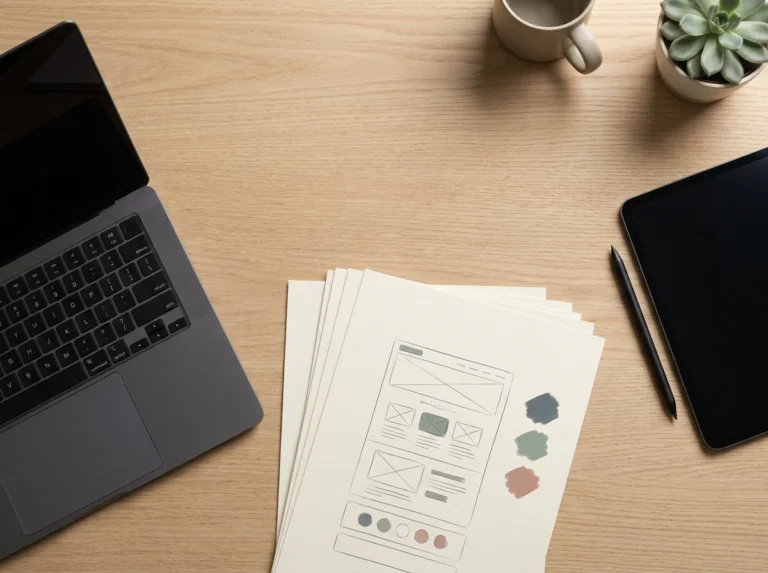
This is the most common starting point. A DIY builder gives you a template and a set of customisation options within that template. What it can’t give you is a design built specifically around your brand, your audience, and the impression you want to make. The result, even when it’s been carefully adjusted and personalised, still carries the visual fingerprint of the platform it was built on. It looks like a Wix site or a Squarespace site rather than looking like your business.
For businesses where credibility and first impressions carry commercial weight, this matters more than it might seem. A client comparing two service providers will form a judgement about professionalism based on the website before a single conversation takes place. A site that looks templated signals a certain level of investment in the business’s own presentation. A custom-designed site signals something different. In competitive local markets, that difference influences decisions.
2. It’s Slow, and That’s Hurting Search Rankings
Page speed is one of the most consistent points of frustration for businesses moving away from DIY builders. The platforms themselves are responsible for the underlying code that runs your site, and that code is typically heavier than a well-built custom site because it has to support every possible feature for every possible user, most of which your site doesn’t need. The result is a site that loads more slowly than it should, particularly on mobile.
This isn’t just a user experience issue. Google uses mobile page speed as a ranking factor, which means a slow DIY builder site is directly suppressing your position in local search results for terms like “web design Kildare” or whatever your core service area is. Businesses that switch to a properly optimised custom WordPress build consistently see performance scores improve substantially, often from scores in the 50 to 65 range on Google’s PageSpeed Insights to scores above 90. That improvement translates directly to better search visibility and lower bounce rates from visitors who would otherwise have left before the page finished loading.
If you want to check where your current site stands, run it through Google PageSpeed Insights and look at the mobile score. Anything below 70 is worth taking seriously.
3. SEO Has a Hard Ceiling on DIY Platforms
Most DIY builders have improved their SEO features considerably over the past few years. You can set page titles, meta descriptions, and alt tags. Some support basic schema markup. For a business with very low local competition, that may be sufficient to rank adequately. But for any business in a moderately competitive niche, the SEO ceiling on a DIY platform becomes apparent quickly.
The limitations that matter most are technical ones: restricted control over crawl behaviour, limited ability to implement custom schema markup, lack of control over URL structures, no access to server-level caching or performance configuration, and constrained options for managing duplicate content. These are the areas where a custom WordPress build on quality managed hosting pulls away decisively from a DIY platform, and they’re the areas that determine whether a site can compete for valuable local search terms over time.
The businesses we work with in Kildare that have made the move from DIY builders to custom WordPress typically see meaningful organic traffic growth within three to six months, simply because we’ve removed a set of technical constraints that were suppressing rankings they should already have been achieving. Our tips every business website needs covers the specific elements that drive local search visibility in more detail.
4. You Can’t Do What You Actually Need to Do
DIY builders work well for a defined set of use cases. A simple information site with a few service pages and a contact form is well within their capabilities. But businesses grow, their needs evolve, and the moment a specific functional requirement emerges that the platform wasn’t designed to support, you hit a wall.
The situations we hear about most frequently from Kildare businesses making the switch:
- A booking or appointment system that integrates cleanly with how the business actually operates, rather than a third-party widget bolted on awkwardly
- A membership or subscription area for repeat clients or course participants
- A product catalogue or e-commerce setup with specific pricing rules, variations, or customer account functionality
- Custom enquiry forms that route to different team members based on service type or location
- Integrations with CRM systems, accounting software, or other business tools the company relies on
Each of these is achievable on a custom WordPress build. On a DIY platform, the answer is usually some combination of a third-party app that doesn’t quite work the way you need, a workaround that creates maintenance overhead, or an outright acknowledgement that the platform can’t support the requirement.
5. The Monthly Cost Has Crept Up and You Own Nothing
This is the point that tends to crystallise the decision for a lot of business owners. DIY builder pricing has increased substantially across most platforms over the past two years, and the features that were once included have been quietly moved to higher-tier plans. When you add up the platform subscription, the e-commerce or booking add-ons, the premium template or design tools, and any third-party integrations, the monthly cost of a DIY builder site for a business with moderate requirements is often higher than the monthly cost of managed WordPress hosting and a care plan from a professional provider.
The more significant issue is ownership. A site built on a DIY platform lives on that platform. You can’t export your design, you can’t move to a different host, and if the platform changes its pricing, discontinues a feature you rely on, or shuts down entirely, your options are limited. A custom WordPress site built by a professional is yours. You own the code, you own the design, and you can host it wherever you choose. That’s a meaningfully different commercial position, particularly for a business that has invested in building search visibility and content over several years.
What the Move Looks Like in Practice
The switch from a DIY builder to a professionally built site is more straightforward than most business owners expect. A new site can be built and refined in parallel with your existing one, with migration happening as a clean cutover once everything is tested and approved. Your existing content, your Google rankings, and your domain are all preserved in the process when the migration is handled properly.
Our Starter Site package covers the full build for businesses that need a clean, fast, basic template site without a large upfront investment. Our Ecommerce package is for businesses that require selling services online with a more custom, distinctive design alongside a technical foundation. For customers who are interested in a completely bespoke website, we offer flexible pricing and can create a custom package. All packages include a handover that means you’re not dependent on us to make basic content updates.
If you’re not sure whether your current site is holding your business back, our Site Audit gives you a clear, evidence-based picture of where it stands and what the most practical next steps look like. And if you’d simply like to have a conversation about your situation, book a free 30-minute consultation with us. We’re based in Kildare, we work with local businesses every day, and we’ll give you a straight answer about whether a move makes sense for your specific situation. You can also explore our full packages and pricing and our full range of services before we speak.